


It is often difficult to pin down what is driving Donald Trump a month into the US and Israel's programme of strikes on Iran.
However, it remains apparent he has a keen focus on the oil markets.
A word – or online message – from the American leader about his strategies used to spark big fluctuations in oil prices, as traders leaped on indications the hostilities could intensify or come to an end.
But in the last week, investors seem to be becoming increasingly doubtful about the value of his comments.
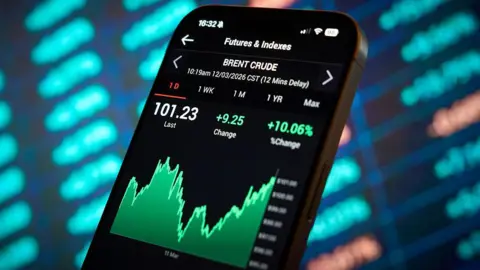
Crude oil was trading at approximately $72 a barrel before 28 February, when the strikes on Iran started.
Last week, it peaked at $118 a barrel on 19 March and by Friday afternoon was sitting at slightly under $112 – substantially up from its pre-conflict price.
Below are several examples from the past month where Trump and the financial markets seem to have bounced off each other – with differing impacts.
Use the navigation button to proceed to the following chart.
"Oil prices have come to represent broader political and financial uncertainties, jumping when Trump's tone becomes hawkish and easing when his comments softens," observes one financial expert.
He continues that financial markets are appropriately reactive to those messages, given the substantial macroeconomic threats that accompany increasing oil prices.
"Investors are trying to evaluate authentic risk," he says. "Markets can look nervous or uncertain, but what they're actually attempting is managing event risk in real time, with oil acting as the core of that."
However, it can be tough for investors to figure out how to trade, particularly because some of Trump's remarks appear designed to affecting oil prices, rather than articulating official strategy, notes another market commentator.
"As they say, the first casualty of conflict is truth," he remarks. "It is likely much of the rhetoric back-and-forth around diplomatic progress, and the contrary, very much are focused on simply moving the price of oil."
Market Reactions Grow More Subdued
On a recent Thursday, minutes after US stock markets experienced their biggest drop since the start of the conflict with Iran, Trump said talks with Iran were going "extremely well" and he was delaying military strikes on Iran's oil facilities until at least 6 April.
But, the oil price proceeded to rise.
One market analyst points out that market reactions are "showing less volatility" because of the "wide divergence" between Trump's reassurances and the lack of confirmation from Tehran.
"Considering the optics, a large number of investors do not foresee an quick resolution to the conflict and markets remain apprehensive."
Another market expert comments investors have also adapted to Trump "frequently altering course at signs of geopolitical, stock market or financial stress".
"We are seeing a level of scepticism, or even downright distrust, emerging at the margins," he adds.


